Contact Us

Phone
${phone}

Email
info@repsmovement.com.au

Address
${address}

Online Enquiry

* Required fields

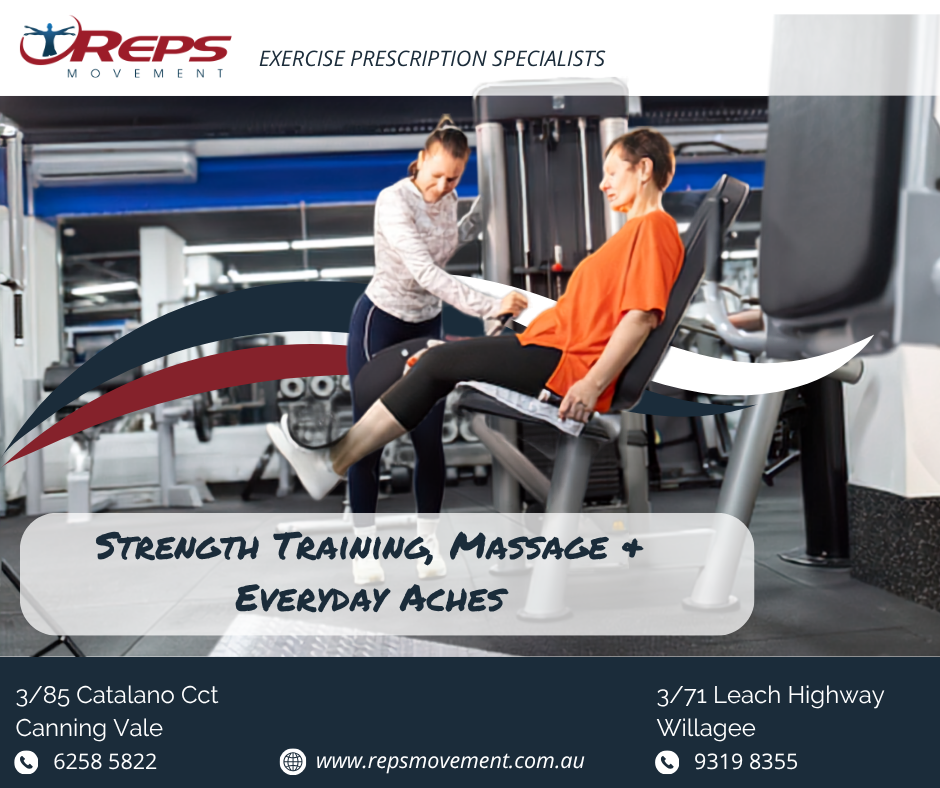
Morning Stiffness: Strength Training & Massage

14/09/2026

You swing your legs out of bed, and before your feet even hit the floor, you already know how the next few minutes are going to go: your lower back needs a moment before it cooperates, your knees make themselves known on the stairs, and it takes half a cup of coffee before you feel like you're actually moving instead of shuffling. If this sounds familiar, you're not alone, and here's the part that might surprise you: it isn't simply a bill that comes due with age. In a lot of cases, it's a signal that your body is asking for more strength, not more rest.

We hear a version of this story from clients in their thirties and clients in their eighties, where the details change but the pattern rarely does. Muscles that haven't been challenged in a while become less efficient at supporting the joints around them, and joints that aren't well supported tend to feel stiffer, especially after a long stretch of stillness like sleep. The good news is that this pattern is remarkably responsive to the right kind of movement, and it responds even better when that movement is paired with skilled hands-on care.

Not Just "Getting Older": The Science of Morning Stiffness

Morning stiffness happens for a fairly logical reason. Joints rely on movement to keep the surrounding tissue supple and to keep fluid circulating through the joint capsule. Hours of stillness overnight means less of that circulation, so the first movements of the day can feel tight or restricted until things "warm up." Add muscle weakness into the mix, particularly around the hips, knees, and spine, and those joints end up doing more of the stabilising work than they're built for.

Resistance training addresses this from two directions at once. First, it builds the muscular support that takes pressure off the joints themselves. Research published in the Journal of Strength and Conditioning Research has found that resistance training improves joint flexibility partly by promoting an acute increase in pain tolerance, allowing joints to move through a greater range even when tissue stiffness hasn't changed much. Second, it improves how well muscles coordinate with each other. Studies suggest resistance training improves coordination between opposing muscle groups, meaning the "brakes" don't fight the "accelerator" during movement, which translates into smoother, less effortful motion, exactly the kind that's missing during those first stiff minutes of the day.

This isn't just theory for older adults with diagnosed joint conditions, either. In people with knee osteoarthritis, a condition where morning stiffness, muscle weakness, and reduced range of motion are hallmark symptoms, structured strength training focused on the surrounding hip and knee musculature has been shown to meaningfully improve both pain and function. Reviews of resistance training for osteoarthritis consistently report that it relieves pain, improves functional ability, and increases muscle strength, and these benefits show up across a wide age range, not just in people already managing a diagnosed condition.

Why It's Not Just About Rest: Where Remedial Massage Fits Into the Picture

Strength training builds the capacity. Remedial massage helps the body actually use it. When muscles are worked, especially after a break from regular training or during a period of increased load, they can develop tightness, trigger points, or a general sense of heaviness that makes the next session feel harder than it should. This is where massage earns its place in a well-rounded plan rather than being treated as an occasional indulgence.

The evidence here is genuinely encouraging. A systematic review and meta-analysis on massage and exercise-induced soreness found that massage reduced markers of muscle damage and inflammation while supporting the recovery of muscle performance after strenuous activity. Other controlled research on percussive and manual massage techniques has shown that they can reduce muscle tone and stiffness immediately after a fatiguing session and support faster strength recovery within the following two days. In practical terms, that means less residual soreness getting in the way of your next walk, gym session, or Pilates class, and a body that recovers well enough to keep training consistently, which is really where the long-term gains come from.

If your recovery between sessions has been feeling harder than it should, that's worth a conversation with your Exercise Physiologist or a remedial massage session, not just a few extra rest days.

More Than Fitness: Mobility, Fitness and Function at Every Age

None of this is about chasing a personal best in the squat rack. It's about being able to get down on the floor to play with a grandchild and stand back up again easily, without needing to grab onto furniture or ask for a hand. It's about carrying the shopping in one trip, gardening on a Saturday without paying for it on Sunday, or simply walking into the day feeling capable rather than cautious. Strength training improves the mobility you rely on for all of it, remedial massage helps keep the process comfortable and sustainable, and together they build a kind of resilience that shows up in ordinary moments far more often than dramatic ones.

This combination also matters regardless of your starting point. Younger clients dealing with desk-bound stiffness, midlife clients noticing new aches after a long day, and older clients managing joint conditions all benefit from the same underlying principle: supported joints move better, and well-recovered muscles are able to keep doing the work that supports them.


Small Steps, Real Change

You don't need to overhaul your week to feel a difference. A structured strength program built around your current ability, paired with regular remedial massage to manage soreness and tension, is often enough to change how those first few minutes out of bed actually feel. It's a gradual shift rather than an overnight fix, but it's one that tends to stick because it's built on real physical capacity rather than a temporary trick.

You're Not Stuck With How Mornings Feel Right Now

However your mobility has changed, the story isn't finished. With the right support, most people can meaningfully improve how their body moves and feels, at any age and any starting point.

For our current members: if mornings are still a struggle despite your regular sessions, bring it up with your Exercise Physiologist. A small adjustment to your program, or adding remedial massage between sessions, can make a noticeable difference to how you feel day to day.

For past clients: if it's been a while since your last visit, this is a good moment to come back. Bodies change, and so do the exercises and support that suit them best. We'd love to help you pick up where you left off with a fresh assessment.

For those new to REPS Movement: if stiffness, aches, or reduced mobility have been quietly shaping your daily routine, an initial consultation is the place to start. We'll look at what's actually driving your symptoms and build a plan around strength and recovery that fits your life.

Call

📞 9319 8355 [Willagee]

📞 6258 5822 [Canning Vale]

Book Now

REPS Movement
Exercise Physiology | Remedial Massage | Pilates
Willagee & Canning Vale