Contact Us

Phone
${phone}

Email
info@repsmovement.com.au

Address
${address}

Online Enquiry

* Required fields

Strength and Mobility for Better Balance

19/07/2026

Maybe it's a slight wobble getting out of the shower. Maybe it's grabbing the kitchen bench a little too often, or feeling less confident on uneven footpaths than you used to. If this sounds familiar, you're not alone. Balance concerns are one of the most common things we hear from clients at REPS Movement, and they often arrive with a quiet worry attached: the fear of falling, and everything that might follow.

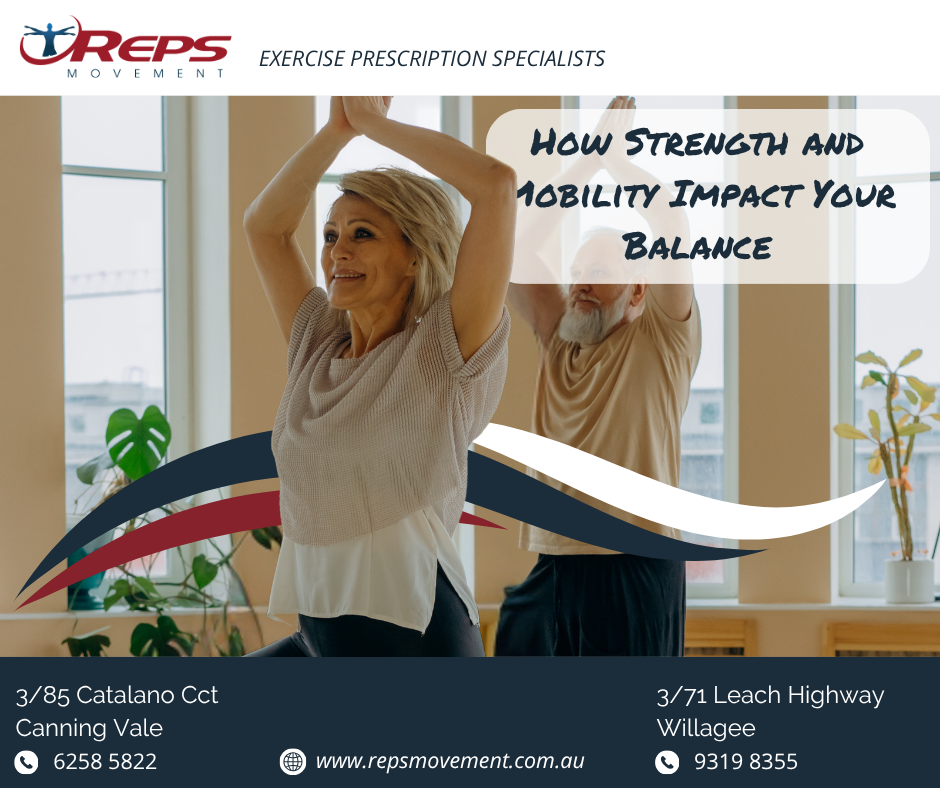
Here's what surprises many people. Balance isn't a single skill that either works or doesn't. It's the result of several systems working together in the background, and two of the biggest contributors are ones we don't always associate with balance at all: strength and mobility. When either one starts to slip, your balance often follows, even if nothing feels obviously "wrong" with your balance itself.

Understanding this connection changes how we approach balance concerns. Rather than only training balance in isolation, real improvement usually comes from building the strength and mobility that support it.

The Hidden Role of Strength in Staying Steady

Every time you stand, walk, or shift your weight, your muscles are making constant, split second adjustments to keep you upright. Your hips, thighs, and ankles in particular act as your body's stabilising system, correcting tiny shifts in weight before you're even aware they've happened.

When strength in these areas declines, which naturally happens with age and inactivity, those corrections become slower and less precise. A small stumble that your body once caught automatically can suddenly turn into an actual fall. This is why stronger legs and hips are one of the most protective factors against falls, particularly for older adults and anyone recovering from illness, surgery, or a period of reduced activity.

The encouraging part is that this kind of strength is highly trainable at any age. Research consistently shows that even modest, well targeted strength work can meaningfully improve stability, often within a matter of weeks.
 

Why Mobility Matters Just as Much

Strength gives your body the power to correct itself. Mobility gives it the range to do so. If your ankles, hips, or spine have become stiff over time, your body simply has less room to adjust before it runs out of options and a stumble becomes a fall.

Ankle mobility is especially important here. A stiff ankle limits how well your foot can adapt to uneven ground, forcing your hips and knees to compensate in ways they weren't designed to. Similarly, tight hips can restrict the stepping response your body relies on to catch itself when you overbalance.

This is why we rarely look at balance as one thing to fix. It's the outcome of strength, mobility, and coordination working together, and addressing only one piece often leaves people frustrated by limited progress.

Why This Matters

Falls are not just a normal, unavoidable part of ageing. They are frequently the result of specific, identifiable changes in strength and mobility, which means they're also frequently preventable. For clients managing conditions through My Aged Care, NDIS, or returning after a joint replacement or extended illness, this distinction matters enormously. A tailored program targeting the right muscle groups and joint ranges can restore confidence long before a fall ever becomes a risk.

This isn't only relevant to older clients either. Anyone who's spent long stretches at a desk, recovered from an injury, or simply become less active over time can develop the same strength and mobility gaps, often without realising it until balance itself starts to feel unreliable.

Rebuilding Your Foundation

The good news is that this is exactly the kind of problem exercise physiology is built to solve. An individualised program can identify which specific muscle groups have weakened and which joints have lost range, then build a progressive plan to restore both. Clinical Pilates is particularly effective here too, blending controlled strength work with mobility and body awareness in a way that translates directly into everyday stability.

Small, consistent changes tend to compound quickly. Clients often notice improved confidence on stairs or uneven ground well before they notice measurable strength gains, simply because the body starts trusting itself again.


Your Next Steps

If you're a current member, this is a great time to speak with your Exercise Physiologist about specifically incorporating strength and mobility work into your existing program, particularly if balance hasn't been a focus area yet. It's a simple conversation that can make a real difference to your everyday confidence on your feet.

If it's been a while since your last visit, we understand life gets busy and programs can fall by the wayside. Balance, strength, and mobility all respond well to consistency, so there's no better time to pick back up than now, and with our Christmas in July offer running, it's also a great time to make it official again.

If you're new to REPS Movement, a consultation with one of our Exercise Physiologists is the ideal starting point. We'll assess your current strength, mobility, and balance together, then build a plan specific to your goals, whether that's confidence on daily walks, recovery from a recent setback, or simply feeling steadier on your feet. With our Christmas in July pricing available this month, there's genuine value in starting your first program now.

Balance concerns can feel unsettling, but they're rarely permanent. With the right combination of strength, mobility, and expert guidance, steadier days are well within reach.
 

Frequently Asked Questions

Q: Can improving strength actually help with balance problems?
A:
Yes. Strength, particularly in the hips, thighs, and ankles, allows your body to make the rapid corrections needed to stay upright. Improved strength is one of the most well supported ways to reduce fall risk.

Q: How is mobility different from balance training?
A:
Mobility refers to the available range of motion in your joints, which gives your body the physical room to adjust and correct itself. Balance training focuses on coordination and control within that range. Both are needed for lasting improvement.

Q: Is it too late to improve my balance if I'm older or already had a fall?
A:
No. Strength and mobility respond to training at any age, and many clients see meaningful improvements in confidence and stability within weeks of starting a tailored program.

Q: Does Clinical Pilates help with balance?
A:
Clinical Pilates combines controlled strength work with mobility and body awareness, making it a highly effective complement to targeted balance and strength programs.

Call

📞 9319 8355 [Willagee]

📞 6258 5822 [Canning Vale]

Book Now

REPS Movement
Exercise Physiology | Remedial Massage | Pilates
Willagee & Canning Vale